Fire and smoke alarms are essential safety devices designed to detect the presence of smoke or fire and alert occupants of potential dangers. When a fire or smoke alarm detects smoke particles or heat indicative of a fire, it emits distinct beeping sounds to signal the need for action. Understanding the meaning behind these beeping sounds is crucial for responding effectively to potential emergencies. In this guide, we’ll explore the various beeping patterns of fire and smoke alarms and their significance.
1. Continuous Beeping
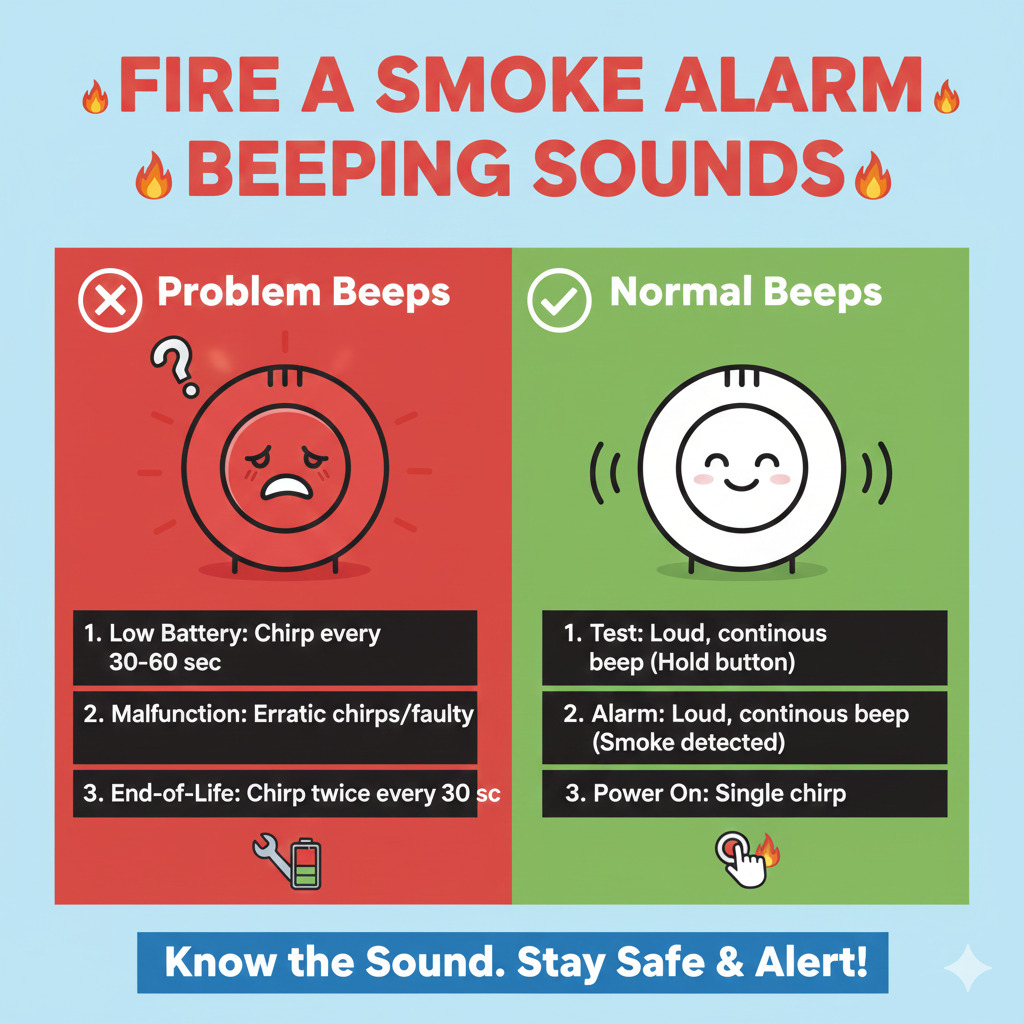
Meaning: Continuous beeping from a fire or smoke alarm typically indicates the detection of smoke or fire.
Action: Immediately evacuate the premises and follow your emergency evacuation plan. Contact emergency services to report the fire and avoid re-entering the building until authorities deem it safe.
2. Intermittent Beeping
Meaning: Intermittent beeping may indicate a low battery warning or a fault in the alarm system.
Action: If the beeping is a low battery warning, replace the battery in the alarm unit. If the beeping persists after battery replacement, inspect the alarm for any visible damage or faults. If necessary, contact a qualified technician for further inspection and repair.
3. Rapid Beeping
Meaning: Rapid beeping may indicate a serious fire or smoke hazard.
Action: Immediately evacuate the premises and call emergency services to report the fire. Avoid re-entering the building until authorities confirm that it is safe to do so.
4. Intermittent Beeping Every 30 Seconds
Meaning: Intermittent beeping every 30 seconds may indicate a low battery warning.
Action: Replace the battery in the alarm unit immediately. Ensure that the replacement battery is compatible with the specific model of the alarm.
5. Beeping with New Battery
Meaning: If the alarm continues to beep after a new battery has been installed, it may indicate a faulty battery connection or a malfunction in the alarm system.
Action: Check the battery connection and ensure it is secure. If the issue persists, inspect the alarm for any visible damage or faults. Consider replacing the alarm or contacting the manufacturer for assistance.
6. Beeping with No Smoke or Fire
Meaning: Beeping with no visible signs of smoke or fire may indicate a false alarm triggered by dust, steam, or other environmental factors.
Action: Ventilate the area to dissipate any smoke or steam that may have triggered the alarm. If false alarms persist, consider relocating the alarm or installing additional detectors in areas prone to false triggers.
7. Random Beeping
Meaning: Random beeping may indicate a malfunction or sensitivity issue with the alarm system.
Action: Investigate the source of the random beeping and inspect the alarm for any visible damage or faults. If necessary, contact a qualified technician for further inspection and repair.
By understanding the meaning behind fire and smoke alarm beeping sounds and taking appropriate action, you can help ensure your safety and that of others in the event of a potential fire or smoke emergency. Regular maintenance, testing, and prompt response to alarms are essential for keeping fire and smoke alarm systems in proper working condition.
8. Beeping Due to Environmental Factors
Meaning: Environmental factors such as dust, humidity, or insects can sometimes trigger false alarms in fire and smoke detectors.
Action: Regularly clean and maintain fire and smoke detectors to minimize the risk of false alarms. Keep the area around detectors free of dust and debris, and ensure proper ventilation to reduce humidity levels.
9. Beeping Due to Sensor Malfunction
Meaning: Sensor malfunction or degradation can cause fire and smoke alarms to emit false or intermittent beeping sounds.
Action: If you suspect sensor malfunction, carefully inspect the alarm for any visible damage or signs of wear. Consider replacing the alarm unit or contacting the manufacturer for assistance with troubleshooting and repair.
10. Beeping During System Test
Meaning: Beeping during a scheduled system test indicates that the alarm is functioning properly and has detected the test signal.
Action: If you initiated a system test, wait for the test sequence to complete and confirm that the alarm responds as expected. If the alarm does not beep during the test or fails to sound properly, consider replacing the unit or consulting the user manual for troubleshooting tips.
11. Beeping Due to Power Failure
Meaning: Power failure or interruption can cause fire and smoke alarms with backup batteries to emit beeping sounds as a warning of low battery or loss of power.
Action: If the alarm emits beeping sounds during a power outage, check the status of the backup battery and replace it if necessary. Consider installing a generator or uninterruptible power supply (UPS) to ensure continuous power to critical safety devices during outages.
12. Beeping Due to End-of-Life Warning
Meaning: Some fire and smoke alarms have built-in end-of-life warnings that indicate when the device has reached the end of its operational lifespan.
Action: If the alarm emits periodic beeping sounds accompanied by an end-of-life warning indicator, replace the alarm unit as soon as possible. Follow the manufacturer’s recommendations for disposing of the old unit and installing a new one.
How to Turn Off Fire Alarm Beeping
If you need to silence a fire alarm temporarily, follow these steps:
- Locate the reset button or silence button on the fire alarm.
- Press and hold the reset or silence button for a few seconds until the alarm stops beeping.
- If the alarm continues to beep after resetting, investigate the cause of the alarm and address any issues accordingly.
Note: Silencing a fire alarm should only be done temporarily for nuisance alarms or false triggers. Always prioritize safety and follow evacuation procedures in the event of a genuine emergency.
By understanding the meaning behind fire alarm beeping sounds and knowing how to respond accordingly, you can help ensure the safety of yourself and others in the event of a potential fire or emergency situation. Regular maintenance, testing, and prompt action are essential for keeping fire alarm systems in proper working condition and minimizing the risk of false alarms or malfunctions.
Conclusion
Understanding the various meanings behind fire and smoke alarm beeping sounds is essential for maintaining a safe and secure environment. By promptly responding to alarms, conducting regular maintenance checks, and addressing any issues as they arise, you can help ensure the effectiveness and reliability of your fire and smoke alarm systems. Remember to follow manufacturer guidelines for installing, testing, and replacing alarm units to maximize safety and peace of mind.
If you continue to experience persistent or unexplained beeping from your fire and smoke alarms, consider consulting a qualified technician or contacting the manufacturer for further assistance. Prioritizing the safety of yourself and others is paramount when dealing with fire and smoke detection systems.
